
Preparing the Next Generation for Wealth
Many families spend years preparing wealth for the next generation.
They save.
They invest.
They build businesses.
They fund education.
They create
trusts
.
They think carefully about taxes, beneficiaries, and estate documents.
All of that matters .
But an equally important question is often left for later:
Are we preparing the next generation for the wealth ?
That question sits at the heart of thoughtful legacy planning. Wealth can provide opportunity, education, security, generosity, and freedom. But without preparation, it can also create confusion, dependency, conflict, or entitlement.
The goal is not simply to transfer assets.
The goal is to cultivate stewardship.

Stewardship Over Entitlement
Entitlement often grows when wealth arrives without context.
A child or grandchild may receive resources, but not understand the sacrifice, discipline, values, or decisions that helped create them. They may know what has been provided, but not why it matters. They may inherit assets, but not responsibility.
Stewardship begins with a different posture.
It teaches that wealth is not only something to own. It is something to care for, direct, and use wisely.
That does not mean every family needs to disclose every financial detail at once. Nor does it mean children should be burdened with adult concerns before they are ready. But it does mean families should be intentional about how financial understanding develops over time.
Stephen M.R. Covey’s Trust & Inspire offers a helpful lens for this conversation. People do not grow into responsibility simply because they are told what to do. They grow when they are trusted appropriately, guided thoughtfully, and inspired to become capable of carrying what has been placed in their hands.
That is a useful frame for legacy planning.
The next generation does not become responsible because documents instruct them to be. They grow into responsibility through conversation, example , education, and increasing opportunities to practice stewardship.
Beyond the Gift
Lifetime gifting can be a powerful planning tool.
It may help reduce future estate exposure, support education, assist with a home purchase, fund a business idea, or allow parents and grandparents to see the impact of their generosity during life.
But gifting should not be viewed only as a transaction.
A gift can also become a teaching moment.
Why are we making this gift?
What do we hope it makes possible?
What responsibility comes with receiving it?
How should this opportunity be honored?
Those questions can help shift the experience from entitlement to stewardship.

The same is true for education planning. A 529 plan is not merely an account. It can represent a family’s commitment to learning, opportunity, and preparation. Used well, education planning can open conversations about discipline, choice, gratitude, and future contribution.
Trust planning can serve a similar purpose.
A trust can protect assets, manage timing, support tax strategy, and create continuity. But the most thoughtful trusts also reflect judgment. They consider not only when beneficiaries receive assets, but how those assets might support maturity, resilience, and purposeful decision-making.
The structure matters.
The message behind the structure matters too.
The Family Conversation
Many families avoid conversations about wealth because they fear saying too much, creating expectations, or changing family dynamics.
Those concerns are understandable.
But silence can create its own risks.
When adult children know nothing about the plan, they may be unprepared to help aging parents, serve as decision-makers, understand estate responsibilities, or work together after a death. When a family business is involved, the lack of communication can become even more complicated. Leadership, ownership, compensation, and expectations may all collide if they have not been addressed in advance.
A family conversation does not need to begin with numbers.
It can begin with values.
What
has
money
meant
in our family?
What choices has it made possible?
What responsibilities come with it?
How do we think about generosity?
How do we want to treat one another when decisions become difficult?

For pre-retirees, this may mean gradually involving adult children in appropriate planning conversations before retirement and later-life decisions become urgent.
For individuals planning independently, it may mean being intentional about legacy, advocacy, and the people who should understand their wishes, especially when family roles are not automatic or clearly defined.
For multi-generational families, it may mean creating simple family governance practices, holding periodic meetings, or developing shared language around values and responsibilities.
For business owners, it may mean preparing the next generation of leadership, designing incentive plans for key employees, and clarifying whether the business is meant to be sold, transferred, or continued.
In each case, the deeper issue is the same.
People should not be surprised by responsibilities they were never prepared to carry .
Preparing Heirs for More Than Assets
A meaningful legacy includes more than financial capital. It includes:
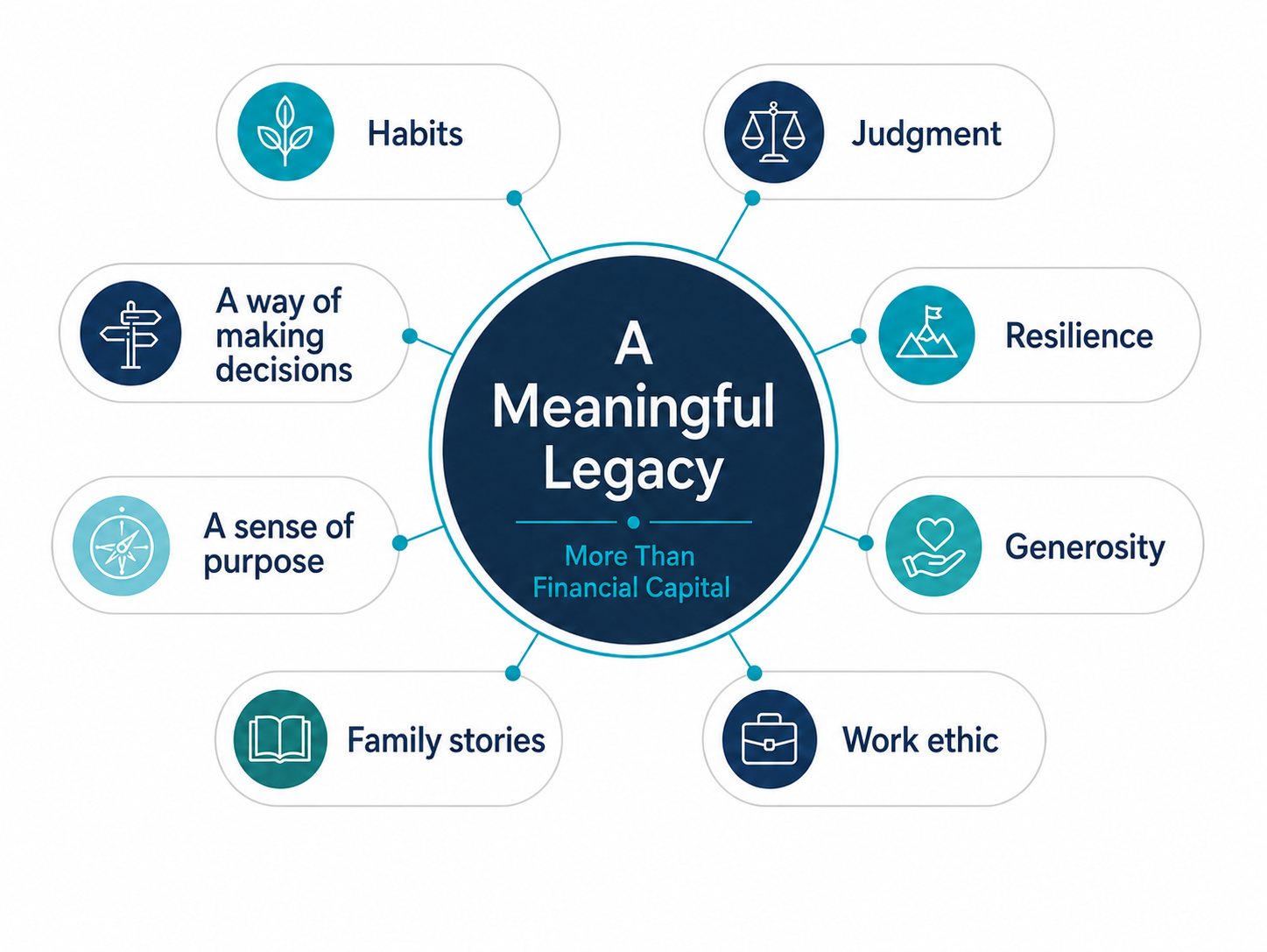
These are often the forms of wealth that matter most.
Financial planning can help organize the technical pieces: lifetime gifting strategies, education funding, trust design, beneficiary structure, tax planning, and estate coordination. But True Wealth planning asks an additional question:
What kind of people are we helping the next generation become?
That question changes the conversation.
It moves the focus from control to preparation.
From inheritance to responsibility.
From wealth transfer to wisdom transfer.
A Thoughtful Next Step
If you are thinking about how to prepare the next generation, a good place to begin is not with a spreadsheet or a legal document.
Begin with a conversation.
What do you want your wealth to teach?
Who needs to be included over time?
What responsibilities should be explained before they are needed?
Where could better communication reduce future confusion?
At Certior , we help families organize, plan, and succeed with what matters most. That includes helping clients think through not only how wealth will be transferred, but how stewardship can be strengthened across generations.
If you or someone you care about is beginning to think more seriously about family wealth, lifetime gifting, education planning, trust funding, or preparing adult children for future responsibilities, we would welcome the opportunity to start a conversation.
Consider inviting an adult child or family member into that conversation.
Sometimes the most important legacy planning begins before anyone receives anything.
